Half Off a House? How HUD's Good Neighbor Next Door Program Works
Buying a home at 50% off the list price sounds like a scam headline. It isn't. It's a real federal program run by the Department of Housing and Urban Development, and it's been quietly helping teachers, police officers, firefighters, and EMTs become homeowners for years.
It's called the Good Neighbor Next Door program, and if you work in one of those four professions, it's worth understanding how it works before you assume you'd never qualify.
The short version
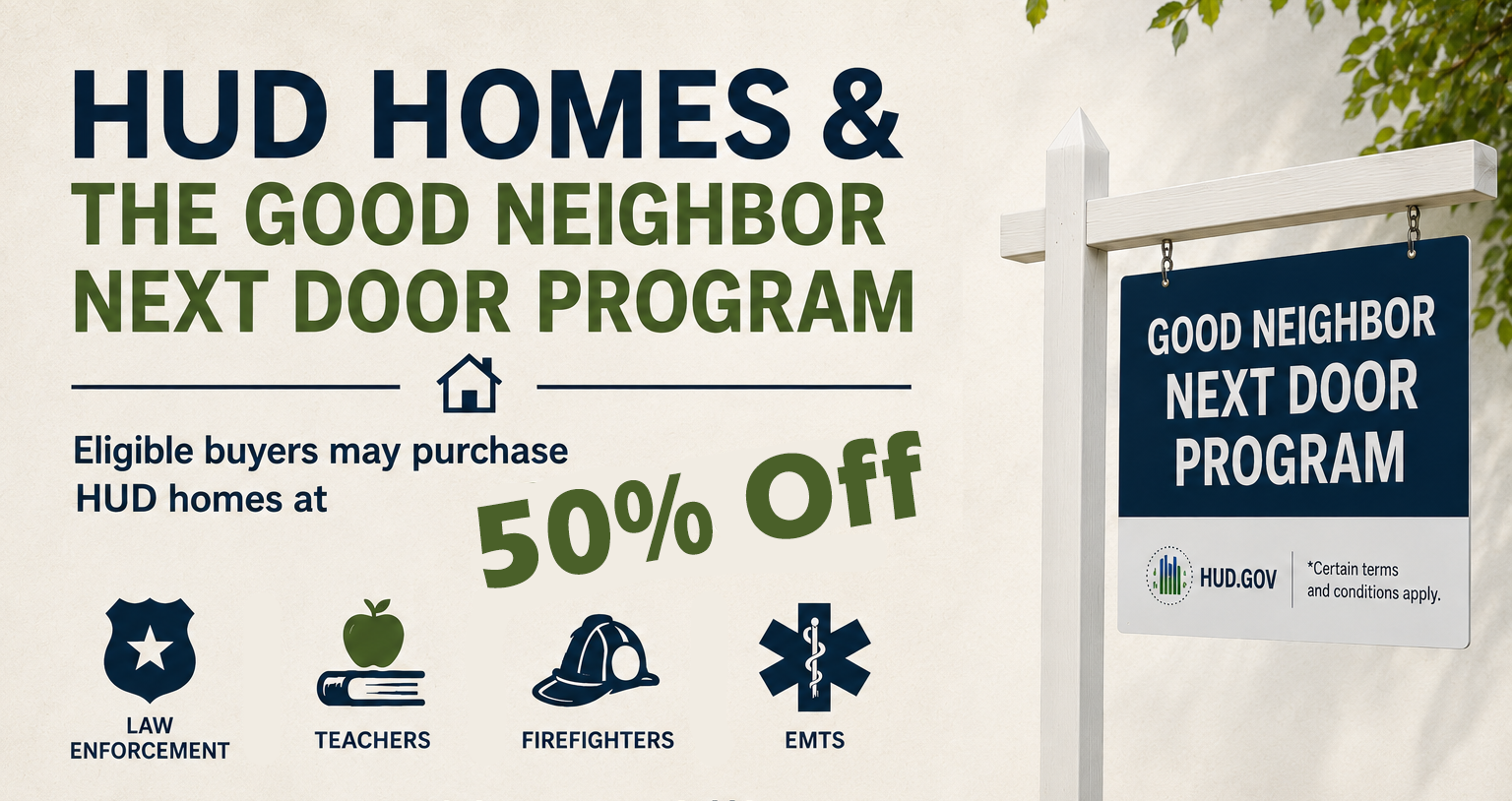
HUD sells certain homes it owns at a 50% discount to eligible public servants. In exchange, you agree to live in the home as your only residence for three years. That's the core of the deal.
The discount is a "silent second" mortgage on the discounted amount. You don't make payments on it, and it doesn't collect interest. As long as you live in the home for the full three years and certify your residency each year, the second mortgage is forgiven, and the discount is yours to keep.
And if you finance with an FHA loan, your required down payment can be as low as $100.
Who qualifies
You must work full-time in one of these roles:
Law enforcement officers employed by a federal, state, or local government agency
Teachers working full-time at a state-accredited public or private school, pre-K through 12th grade
Firefighters employed full-time by a fire department
EMTs employed full-time by an emergency medical services unit
Your job also has to serve the area where the home is located. A teacher in one school district generally can't use the program to buy a discounted home in a different one across the state.
A few other rules apply: the home must become your sole residence, you can't have owned a home in the past year, and you can't have used the program before.
Where the homes are
This is where expectations need managing. You can't pick any house on the market and ask for half off. Eligible properties are HUD-owned homes located in designated revitalization areas — neighborhoods HUD selects based on household income, homeownership rates, and foreclosure activity.
Inventory is limited and changes weekly. Each eligible property is listed exclusively through the program for seven days. If more than one qualified buyer submits interest in the same home, HUD picks the winner by random lottery.
So patience matters. The right property might not appear for months, and when it does, you'll need to move quickly.
How to buy one
Get pre-approved. You'll want financing lined up before a property appears, because the seven-day window doesn't leave time to start from scratch.
Watch the listings. Available homes are posted on the HUD Homestore site, organized by state.
Work with a HUD-registered agent. You can't submit a bid on your own. A real estate agent registered with HUD has to submit it for you — which is one more reason to have your agent relationship in place early.
Close and move in. Once you're in, you'll sign the second mortgage for the discount amount and begin your three-year occupancy period. HUD mails an annual certification form around your purchase anniversary; sign it and send it back.
What to think about before jumping in
The discount is real, but so are the trade-offs. These are foreclosed properties, so condition varies and some will need work. The three-year commitment is binding — this isn't a program for someone who expects to relocate soon. And because you're buying in a revitalization area, you should visit the neighborhood at different times of day and do the same homework you'd do for any purchase.
One exception worth knowing: military members called to active duty during the three years are exempt from the occupancy requirement and may rent the home out while deployed, with proper documentation.
The bottom line
For the right buyer, Good Neighbor Next Door can turn homeownership from a someday goal into a this-year plan. The catch is availability — limited inventory, specific neighborhoods, and a lottery when demand is high. But a 50% discount and a $100 down payment are hard numbers to beat anywhere else in real estate.
If you're a teacher, officer, firefighter, or EMT and you're curious whether any eligible properties are available in our area, reach out. We can help you get pre-approved, watch the listings, and submit your bid when the right one shows up.
Check the listings for your state.
Program details are set by HUD and subject to change. Verify current requirements at hud.gov before making any decisions.